Xuetangliangzi Site
Introduction
The Xuetangliangzi site is a significant archaeological location situated in Shiyan, Hubei province. It is renowned for its remarkable contribution to understanding human evolution, particularly concerning the hominid species known as Homo erectus. This site has been pivotal in providing insights into the early periods of human history in East Asia, offering crucial evidence about the origins and development of early humans. The Xuetangliangzi site has gained international recognition due to its well-preserved fossils, including the notable discovery of complete human skulls that date back approximately one million years.
Location and Discovery
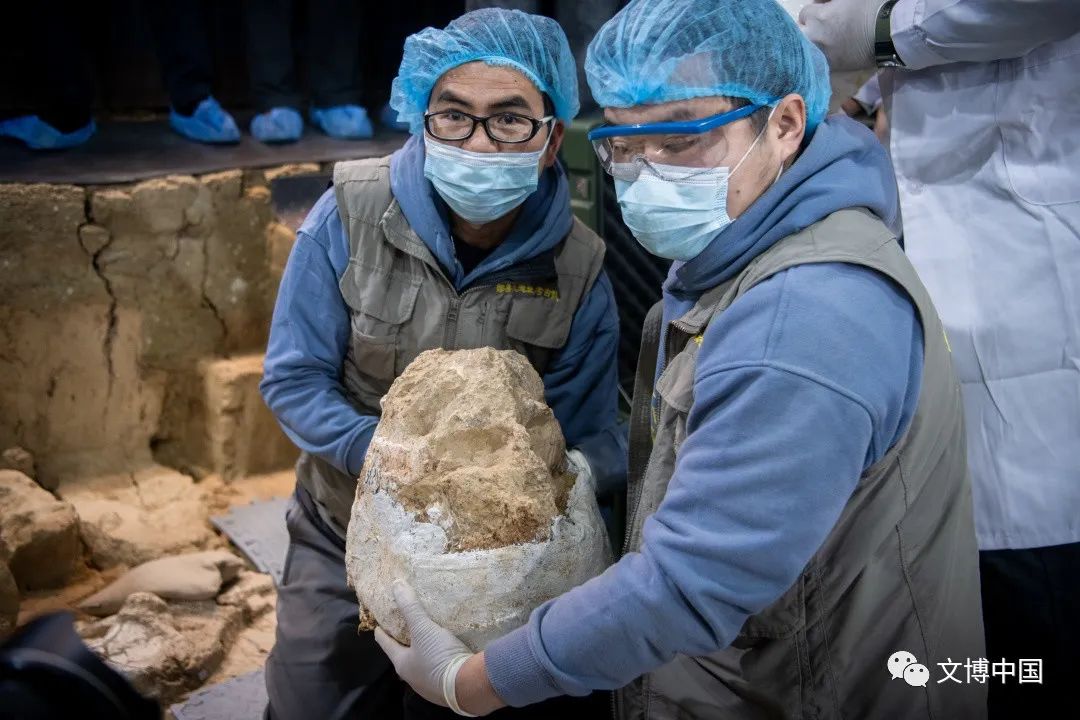
The Xuetangliangzi site is located in Mituosi village, Qingqu town, Yunyang district of Shiyan city, Hubei province. This site became a focal point for archaeologists after the discovery of the first skull, known as the No 1 skull of Yunxian Man, in 1989, followed by the No 2 skull in 1990. These discoveries marked the beginning of extensive archaeological investigations at the site. The site's significance was further amplified with the unearthing of the No 3 skull on May 18, 2022, which was found roughly 35 meters from the earlier discoveries and buried about 62 centimeters below the ground surface. The discovery of these skulls has firmly placed the Xuetangliangzi site on the map as a key location for understanding the history of human evolution in East Asia.
Archaeological Excavations
Initial Excavation
The initial excavations at the Xuetangliangzi site in the late 20th century yielded two severely deformed skulls of Yunxian Man, providing initial, albeit limited, insights into the existence and characteristics of early human species in the region. These early findings, dating from 800,000 to 1.1 million years ago, set the stage for more focused and technologically advanced excavations in subsequent years. Despite the deformation of the first two skulls, they underscored the potential of the site to unveil significant archaeological information regarding early human species in East Asia.
Recent Discoveries
The recent discovery of the No 3 skull has been a monumental advancement in the study of Homo erectus. Found in excellent condition, this skull provides a clearer picture of the anatomical features of early humans, showcasing typical characteristics of Homo erectus. The well-preserved state of the fossil, including the frontal bone, eye sockets and cheekbones, offers unprecedented opportunities to conduct advanced research on the evolutionary history of humans. Ongoing excavations are supported by modern technological methods, including 3D virtual imaging, which aid in reconstructing the historical environment and analyzing the sediments and other biological materials found at the site.
Historical Significance
The Xuetangliangzi site holds immense historical significance as it represents one of the earliest known periods of human existence in East Asia. The discoveries of the Yunxian Man skulls have provided crucial evidence supporting the continuity of human evolution in the region. These findings contribute to the broader discourse on the transition from Homo erectus to Homo sapiens, offering insights into the morphological characteristics and adaptive strategies of early human populations. As such, the Xuetangliangzi site is a critical link in understanding the evolutionary trajectory of human beings, making it an invaluable resource for anthropologists and archaeologists worldwide.
Artifacts and Findings
Beyond the human skull fossils, the Xuetangliangzi site has also yielded various animal bones and lithic tools. These artifacts provide a glimpse into the lifestyle, diet, and technological capabilities of early human communities. The presence of stone tools suggests the development of early tool-making techniques, which is integral to understanding the cognitive and cultural evolution of Homo erectus. Additionally, the discovery of animal bones alongside human fossils indicates possible hunting or scavenging activities, shedding light on the subsistence strategies of early humans in the region.
Preservation Efforts
Preservation efforts at the Xuetangliangzi site are paramount to ensuring the longevity and continued study of these invaluable archaeological findings. The integration of cutting-edge technologies, such as 3D imaging and advanced dating methods, not only aids in the excavation process but also allows for a more comprehensive documentation and analysis of the site. These methods enable researchers to create reversible digital models of the excavation area, facilitating long-term studies and preserving the integrity of the site for future research. Collaborative efforts between various research institutes and cultural heritage organizations are crucial in maintaining the site's preservation and ensuring its contributions to our understanding of human history endure.
Cultural Impact
The discoveries at the Xuetangliangzi site have had a profound cultural impact, both within China and internationally. They have contributed significantly to the global understanding of human evolution and have reinforced the importance of East Asia in the broader narrative of human history. The site has also become a focal point for educational and cultural initiatives, attracting scholars, researchers, and visitors interested in archaeology and ancient human history. The findings from Xuetangliangzi have sparked renewed interest in the origins and evolution of human species, inspiring further research and exploration in the field of paleoanthropology.








